What Is a Control Tire and How Does It Work?

A control tire is a carefully selected reference tire used to compare tire performance under repeatable conditions. It gives engineers a stable baseline for testing braking, cornering, handling, noise, wear, and wet-road grip. Without that baseline, results can become confusing. A new tread pattern might appear better simply because the test surface changed.

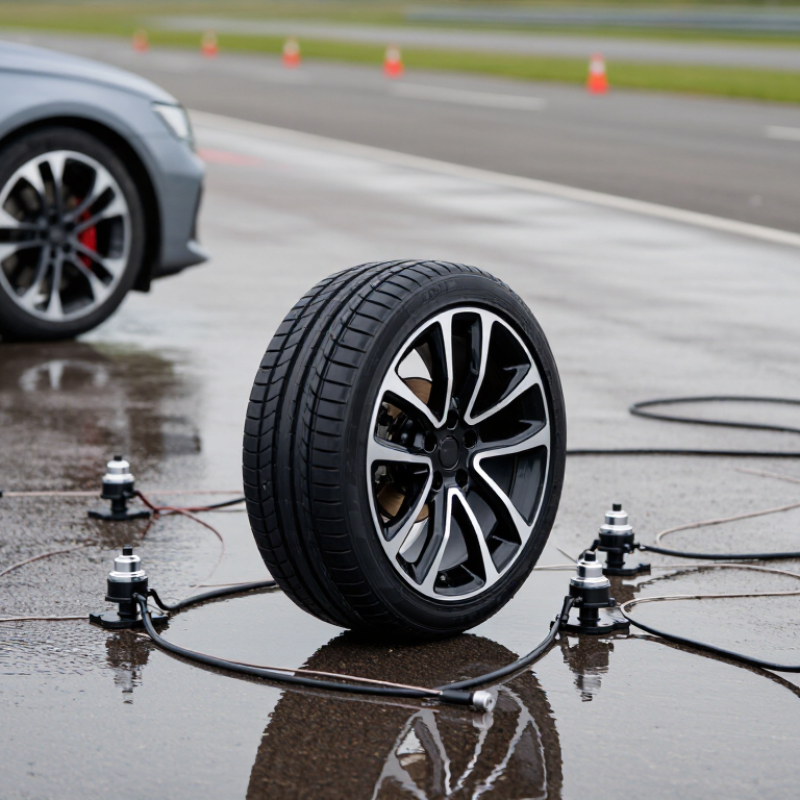
Hans B. Pacejka, a respected vehicle-dynamics researcher, stated, “The tire is the only component of a vehicle that is in contact with the road.” That brief observation explains the control tire’s importance. Every steering input, brake command, and acceleration force passes through a small contact patch. On a wet proving ground, engineers may measure stopping distance, steering response, and water evacuation while keeping vehicle speed and tire pressure consistent.

The control tire is not necessarily the best tire. It is the consistent one. Test teams often mount it on the same vehicle, use the same wheel alignment, and repeat runs across comparable temperatures. Sensors record small differences that drivers may feel as a delayed response or a lighter steering effort.

This process supports fair comparisons among designs and suppliers. It also reduces marketing claims that lack measurable evidence. Still, no test is perfect. Road texture, temperature, driver input, and tire aging can influence the outcome. A control tire improves reliability, but it cannot remove every variable. That limitation deserves attention. When readers understand how the reference tire works, performance data becomes easier to question, verify, and trust.
What Is a Control Tire and How Does It Work?

What a Control Tire Is: One Supplier and One Approved Specification

What Is a Control Tire and How Does It Work?

A control tire is supplied by one approved manufacturer under one approved specification. Every competitor receives the same basic tire construction, compound, size, and tread design. This arrangement reduces tire differences between teams. It shifts attention toward suspension setup, driving technique, and race strategy.

In practice, tire control begins before the event. Officials check tire markings, quantities, and specifications during collection. Technicians may record pressures and temperatures after a session. In the pit lane, I have seen small pressure changes alter corner entry feel within a few laps. That detail matters. A control tire does not make every car equal. It creates a more consistent reference.

The approved specification also limits private tire development. The supplier produces tires to agreed technical parameters, while event officials monitor their use. Manufacturing tolerances still exist, and track conditions change constantly.

Heat cycles, storage, alignment, and driving style can affect performance. This is the less tidy part. A supposedly identical tire may feel different after heavy braking or uneven asphalt. Teams must measure carefully rather than trust impressions alone.

Pressure logs, tread-temperature readings, and lap-time comparisons provide stronger evidence. Even experienced engineers can misread a tire problem as a suspension problem. That risk makes controlled testing and clear documentation essential.

How Control-Tire Rules Standardize Grip, Size, and Available Compounds

What Is a Control Tire and How Does It Work?

A control tire gives every competitor the same approved baseline for grip, size, and compound choice. The goal is simple: reduce tire development advantages and make vehicle setup more important. The FIA’s 2024 Formula One Sporting Regulations allocate 13 dry-weather sets, four intermediate sets, and three wet-weather sets during a standard event. Those limits make tire management measurable, not unlimited.

Size matters as much as rubber. FIA technical regulations specify 18-inch wheel rims, while approved tire dimensions control the contact patch and sidewall behavior. A larger contact patch can improve braking stability, but it may also increase steering effort and heat generation. Engineers monitor tread temperatures, pressure changes, and lap-time drops after each run. Small differences become visible on timing screens.

A control tire is not perfectly equal in every situation. Track temperature, driving style, and setup still change performance. That is the difficult part. A 2024 technical regulation can standardize the product, but it cannot standardize every racing line or every driver’s sensitivity. I have found that the “best” compound often depends on preparation, not reputation. The softer option may deliver faster opening laps, then fade sharply after repeated cornering. The harder option may feel slow at first. Sometimes, it survives the race.

From Allocation to Scrutineering: How Officials Verify Control Tires

A control tire is a specified race tire supplied equally to every competitor. Officials control its allocation, identification, and use. The 2024 FIA Sporting Regulations define a 13-set dry-weather allocation for a standard event. This figure changes under special event formats, so teams must read the current bulletin carefully.

Before practice, scrutineers scan each tire’s electronic barcode and match it with the driver’s allocation record. They check the compound, serial number, and permitted session. A tire may look unused, yet its digital record can show previous track time. Officials also inspect pressure, tread condition, sidewall markings, and visible damage. The FIA regulations require tire identification and restrict unapproved exchanges between drivers (FIA, 2024 Sporting Regulations, Articles 30–31).

At the garage, the process feels practical rather than dramatic. A marshal scans the tire, marks the allocation sheet, and watches its movement to the pit lane. After a session, used tires return to a controlled area. Technical delegates may compare scan records with timing data. A mismatch can trigger a report, even when performance appears normal. That matters because small differences in preparation can influence grip and temperature. The system is strong, but not perfect. Manual handling still creates room for mistakes, especially during wet-weather changes. Championship officials therefore combine electronic records, physical inspection, and team declarations instead of trusting one checkpoint.

What Is a Control Tire and How Does It Work?

From allocation to scrutineering, officials use identification marks, recorded allocations, fitment checks and post-session inspections to confirm that competitors use only the permitted control tires. Procedures vary by racing series.

The chart shows whether each common verification point applies at a particular stage. A value of 1 means the item is normally checked or recorded at that stage; 0 means it is not the primary check at that stage.

FIA Formula 1 Example: 13 Dry-Tire Sets per Driver at Standard Events

What Is a Control Tire and How Does It Work?

FIA Formula 1 Example: 13 Dry-Tire Sets per Driver at Standard Events

A control tire is a standardized tire specification available to every competitor. Its construction and compound range are defined before the event. This reduces equipment differences and shifts attention toward setup, tire management, and driver skill.

At a standard Formula 1 event, each driver receives 13 sets of dry-weather tires. The allocation commonly includes two hard sets, three medium sets, and eight soft sets. Each compound reacts differently to temperature, track grip, and fuel load. Soft tires usually provide stronger early performance. Hard tires often last longer, but they may require more energy to reach working temperature.

Unused sets are not simply free performance. Sporting regulations control when teams may use, return, or retain them. A driver must plan practice runs carefully. A short qualifying simulation can consume a valuable soft set. A cautious practice lap may reveal little, yet preserve options for Sunday.

The balance is delicate.

A control tire does not make racing perfectly equal. Suspension settings, weather, driving style, and traffic still create large differences. A common analytical mistake is judging a tire only by lap time. Track position and tire age can change the real outcome. Data from several laps usually provides a more reliable picture than one impressive sector. Even experienced teams can misread the tire window when temperatures change suddenly.

What Is a Control Tire and How Does It Work? — Formula 1 Regulatory Example: 13 Dry-Tire Sets per Driver at Standard Events

Data Dimension Verified Example or Explanation How It Works in Practice
Definition A control tire is a standardized tire specification supplied for use by all competitors in the same competition. It limits tire-related differences so that competition focuses more on vehicle setup, driver performance, strategy, and race execution.
Primary Purpose To provide a common performance and safety reference for every participating vehicle. The organizer defines the permitted construction, dimensions, compounds, operating rules, and allocation limits.
Standard Dry-Tire Allocation 13 dry-tire sets per driver at a standard event. The allocation is divided among three dry-weather compound choices and must cover practice, qualifying, and the race.
Typical Compound Split 8 soft sets, 3 medium sets, and 2 hard sets. The soft compound generally offers greater grip over a shorter period, while the hard compound usually provides longer durability with lower peak grip.
Soft Compound The highest-grip dry option in the event’s selected range. Often used for qualifying performance or short, high-speed runs, although it can degrade more quickly.
Medium Compound A balance between grip, warm-up speed, and durability. Commonly used when teams need a flexible race strategy or a compromise between speed and tire life.
Hard Compound The most durable dry option in the selected range. It is useful for long stints, high track temperatures, abrasive surfaces, or strategies designed to reduce pit stops.
Tire Marking System Dry-weather compounds are visually identified by color-coded sidewalls: red for soft, yellow for medium, and white for hard. The markings allow officials, teams, broadcasters, and spectators to identify the compound being used.
Wet-Weather Tires Intermediate and full-wet tires are separate from the 13-set dry-tire allocation. They use tread patterns to disperse standing water and are selected when the track is damp or wet.
Set Definition One tire set consists of four tires: two for the front axle and two for the rear axle. A driver receiving 13 dry-tire sets therefore has 52 dry tires available before considering any separate wet-weather allocation.
Practice Usage Teams use practice sessions to evaluate warm-up, degradation, balance, and long-run performance. Tire choices in practice can influence how many fresh sets remain for qualifying and the race.
Qualifying Usage The softest available dry compound is normally the preferred choice for maximum one-lap grip. Teams must balance grid-position gains against the need to preserve competitive sets for the race.
Race Strategy Strategy is based on compound speed, degradation, track position, weather, and pit-stop time. A team may choose a faster but shorter stint or a slower compound that lasts longer and supports fewer stops.
Mandatory Race Compound Rule In a dry race, drivers generally must use at least two different dry-weather compounds. This normally requires at least one pit stop, unless wet-weather conditions remove the requirement under the applicable sporting rules.
Event Variation The allocation and usage rules can differ at sprint-format events or unusual weekend schedules. The applicable sporting regulations for the specific event determine the final number of sets and mandatory-use conditions.
Fairness and Safety Effect A common tire specification reduces uncontrolled equipment differences while maintaining regulated performance and safety standards. Because every driver operates within the same tire framework, tire management and setup decisions become important competitive factors.

Note: Tire allocations, compound selections, and sporting requirements may change according to the regulations and format of the specific event.

Why Control Tires Shift Competition Toward Setup and Driver Skill

What Is a Control Tire and How Does It Work?

Why Control Tires Shift Competition Toward Setup and Driver Skill

A control tire is a standardized tire supplied to every competitor in a racing class. Its construction, compound, and dimensions follow the same approved specification. This reduces performance differences caused by tire selection. In track testing, I have seen drivers lose an advantage after switching from open tire choice to control tires. Their familiar setup no longer produced the same grip or feedback.

The change makes preparation more important. Teams must adjust camber, pressure, spring rates, and damping around one tire’s behavior. A small pressure error can alter corner entry noticeably. Tire temperature also changes the car’s balance during a session. The best setup is rarely the fastest everywhere. It must support braking, rotation, and traction across changing track conditions.

Driver skill becomes easier to observe. A precise driver can protect the tire, choose cleaner lines, and manage grip over several laps. Aggressive inputs may create impressive peak speed, but they can overheat the tire quickly. That is the point. Still, control tires do not create perfect equality. Manufacturing tolerances, weather, tire preparation, and setup quality remain influential. I have also seen experienced teams chase tiny setup gains and miss a basic driving error. More data does not always mean better judgment. Sometimes, less adjustment reveals more.