Choosing the right tpms sensor kit can be difficult for global buyers. Vehicle coverage, frequency, valve design, and programming methods vary by market. A kit that works smoothly on a European hatchback may fail on a North American pickup. That difference matters.
This guide examines leading sensor kits through practical buying factors. It considers fitment databases, relearn procedures, battery performance, sealing quality, and tool compatibility. Real workshop experience shows that small details often create the largest delays. A mismatched valve stem can leave a vehicle on the lift for hours. An unprogrammed sensor may look perfect but remain invisible to the vehicle.
Reliable selection also requires careful source checking. Buyers should compare manufacturer specifications, supported vehicle lists, warranty terms, and regional technical support. Independent testing and installer feedback can reveal problems that product pages overlook. Some kits claim broad coverage, yet their software updates may be limited. That deserves attention.
Climate is another practical concern. Sensors may face freezing roads, intense heat, road salt, or long storage periods. Quality materials and stable battery performance help reduce avoidable replacements. However, no kit suits every vehicle or market. Compatibility should be verified by model year, trim, frequency, and relearn method.
This overview is designed for importers, distributors, repair shops, and informed vehicle owners. It does not treat the cheapest option as the best option. Instead, it balances reliability, installation effort, lifecycle value, and after-sales support. Some recommendations may still require further checking. That is the honest part. Manufacturers update databases, and vehicle specifications can differ between regions.
What TPMS Sensor Kits Are and How They Work
A TPMS sensor kit monitors tire pressure and, in many vehicles, tire temperature. Most kits include four wheel sensors, valve stems, seals, a receiver, and programming tools. Sensors sit inside the tire or attach near the valve. They measure pressure continuously and transmit readings to the vehicle display or an external monitor.
Two main systems exist. Direct TPMS uses a pressure sensor inside each wheel. It usually provides accurate readings for individual tires. Indirect TPMS compares wheel-speed changes through the anti-lock braking system. It may cost less, but it cannot measure pressure directly. According to the U.S. National Highway Traffic Safety Administration, properly applied TPMS technology could prevent about 200 deaths and 33,000 injuries annually in the United States. That figure shows its practical value.
Installation still demands care. Each sensor needs the correct frequency, valve design, and vehicle compatibility. After fitting new sensors, the vehicle may require relearning or calibration. A workshop should check readings with a certified gauge, not trust the dashboard alone. Small errors matter. The U.S. Department of Energy reports that tires underinflated by 1 psi can reduce fuel economy by about 0.2%. Battery life also varies with temperature, driving distance, and transmission frequency. No kit is foolproof. A warning light can reflect a damaged valve, weak battery, or incorrect programming rather than a simple air leak.
Choosing the right TPMS sensor kit starts with the vehicle, not the box. Direct TPMS kits use pressure sensors inside each tire. They provide real-time pressure and temperature readings. This suits passenger cars, SUVs, and light trucks with factory-installed valve sensors. Indirect TPMS kits use wheel-speed data from the anti-lock braking system. They cost less, but they cannot measure pressure directly. Some newer vehicles use hybrid systems, combining both methods.
The National Highway Traffic Safety Administration reports that TPMS can reduce the likelihood of severely underinflated tires by about 55%. That figure shows why compatibility matters. For commercial vans and heavier vehicles, choose sensors with suitable pressure ranges, durable valve stems, and stable wireless communication. Universal programmable sensors can cover several vehicle models, but they still require correct software configuration. A small mismatch can create repeated warning lights. It happens more often than installers admit.
Tips: Check the vehicle’s model year, sensor frequency, valve type, and relearn procedure before ordering. Industry data from MarketsandMarkets identifies replacement demand as a major part of the TPMS market, especially as installed sensors age. Replace sealing washers and valve cores during installation. Do not rely only on automatic learning; confirm each wheel position with a diagnostic tool. Service experience also suggests checking the spare tire, when it has a sensor. Catalog information is useful, but not perfect. Verify it against the vehicle manual and live diagnostic results.
| TPMS Sensor Kit Type | Typical Vehicle Application | Operating Principle | Common Frequency or Interface | Valve and Installation Format | Programming Requirement | Key Buying Considerations |
|---|---|---|---|---|---|---|
| Direct TPMS Replacement Kit | Passenger cars, crossovers, SUVs, and light commercial vehicles equipped with in-wheel pressure sensors | A pressure sensor inside each wheel measures tire pressure and temperature, then transmits data to the vehicle receiver | Commonly 315 MHz in North America and approximately 433 MHz in many European and Asian applications; exact frequency is vehicle-specific | Clamp-in metal valve or snap-in rubber valve; valve material and shape must match the wheel and vehicle application | Usually requires sensor activation, relearn, or vehicle-specific programming after installation | Confirm OE sensor reference, frequency, protocol, valve angle, battery specification, and relearn method before purchase |
| Universal Programmable Direct TPMS Kit | Mixed vehicle fleets, repair shops, tire dealers, and distributors serving multiple vehicle platforms | A configurable sensor is programmed with vehicle-specific identification data and communication parameters | Usually offered in region-specific frequency versions; some designs support more than one approved application range | Replaceable clamp-in or snap-in valve options are common; interchangeable valves can simplify inventory management | Requires a compatible TPMS programming tool and correct vehicle application data | Check application coverage, software update policy, battery status, programmable protocols, and available valve accessories |
| Clamp-In Metal Valve Sensor Kit | Passenger vehicles and light commercial vehicles using metal valve-hole wheels | In-wheel electronic sensor is secured to the rim through a metal valve stem | Vehicle-dependent radio frequency, commonly around 315 MHz or 433 MHz | Metal clamp-in valve with a sealing grommet, retaining nut, and serviceable valve core | May require activation and relearn; programmable versions also require tool configuration | Verify valve angle, rim-hole size, corrosion resistance, tightening torque, and replacement service parts |
| Snap-In Rubber Valve Sensor Kit | Passenger cars and selected light vehicles with compatible rubber valve mounting points | Integrated sensor and rubber valve assembly monitors pressure from inside the tire cavity | Frequency and communication protocol vary by vehicle market and model year | One-piece or serviceable snap-in rubber valve; suitable only where the rim and application permit this format | Normally requires activation, identification registration, or an automatic relearn procedure | Check rubber compound, temperature range, valve-hole compatibility, sealing performance, and replacement interval |
| Heavy-Duty Truck and Bus TPMS Kit | Trucks, buses, trailers, motorhomes, and commercial vehicles with multiple axles | External or internal sensors monitor pressure and temperature across multiple wheel positions and transmit alerts to a display or fleet system | Wireless sensor-to-monitor communication; some fleet systems also use cellular, Bluetooth, or telematics connectivity | External valve-cap sensors, internal sensors, or high-pressure valve assemblies depending on vehicle design | Sensor pairing and axle or wheel-position configuration are typically required | Confirm pressure range, sensor durability, trailer support, display capacity, alert thresholds, and protection against water and road debris |
| External Valve-Cap TPMS Kit | Passenger cars, trailers, caravans, recreational vehicles, and aftermarket monitoring applications | Small sensors attach to the outside of the valve and transmit pressure and temperature readings to a dedicated monitor or mobile device | Short-range wireless communication; the exact radio specification depends on the kit design and destination market | Screw-on valve caps with seals; generally quick to install without removing the tire | Usually requires sensor-to-display pairing and wheel-position assignment | Evaluate water resistance, theft protection, battery replacement, valve compatibility, display visibility, and pressure range |
| Trailer and Caravan TPMS Kit | Car trailers, caravans, utility trailers, boat trailers, and recreational vehicle combinations | Monitors tire pressure and temperature on towed wheels and sends information to a cab-mounted or portable display | Wireless sensor network with a range suitable for the towing distance; repeaters may be needed on long vehicle combinations | External valve-cap sensors are common; internal sensors may be selected for theft resistance and permanent installation | Requires trailer sensor pairing, position labeling, and sometimes a signal repeater setup | Check maximum number of wheels, communication range, waterproof rating, high-pressure capability, and separate trailer profiles |
| Indirect TPMS-Compatible Upgrade Kit | Vehicles designed to estimate low tire pressure through wheel-speed or other existing chassis sensors | Uses differences in wheel rotation or tire behavior instead of measuring pressure directly inside each tire | No dedicated in-wheel TPMS radio sensor is normally required; compatibility depends on the vehicle control system | No additional valve-mounted pressure sensor in a standard indirect configuration | Usually requires tire-pressure calibration or reset through the vehicle controls after adjusting tire pressure | Do not substitute a direct sensor kit unless the vehicle is designed for direct TPMS; verify the system architecture and service procedure |
| Solar or Stand-Alone Display TPMS Kit | Older vehicles, imported vehicles, recreational vehicles, trailers, and fleets without a factory TPMS display | Aftermarket sensors transmit readings to an independent dashboard display rather than the original vehicle instrument cluster | Dedicated short-range wireless link; some displays support rechargeable, USB-powered, or solar-assisted operation | External valve-cap or internal tire-mounted sensors, depending on the selected configuration | Requires pairing sensors with the stand-alone monitor and setting alert thresholds | Assess screen readability, power method, sensor count, alarm customization, operating temperature, and replacement battery availability |
Buyer note: TPMS compatibility is determined by vehicle model, model year, market, receiver protocol, frequency, valve design, and relearn procedure. Always verify application data with the vehicle manufacturer’s service information before ordering or installing a sensor kit.
A compatible TPMS kit must match the vehicle’s year, model, trim, and sensor protocol. “Universal” does not always mean ready to install. Check the required frequency, valve-stem design, pressure range, and relearn method. Some vehicles need automatic learning, while others require a diagnostic tool or a short driving procedure. Verify fitment through current service data, not only a product photograph.
Performance should be tested under realistic conditions. Look for stable readings during cold starts, highway driving, and sudden temperature changes. A reliable sensor should report pressure and temperature consistently, without repeated signal drops. Battery life, sealing quality, operating temperature, and water resistance also matter. In workshop inspections, poorly sealed valve areas often become the weak point. Small details cause expensive callbacks.
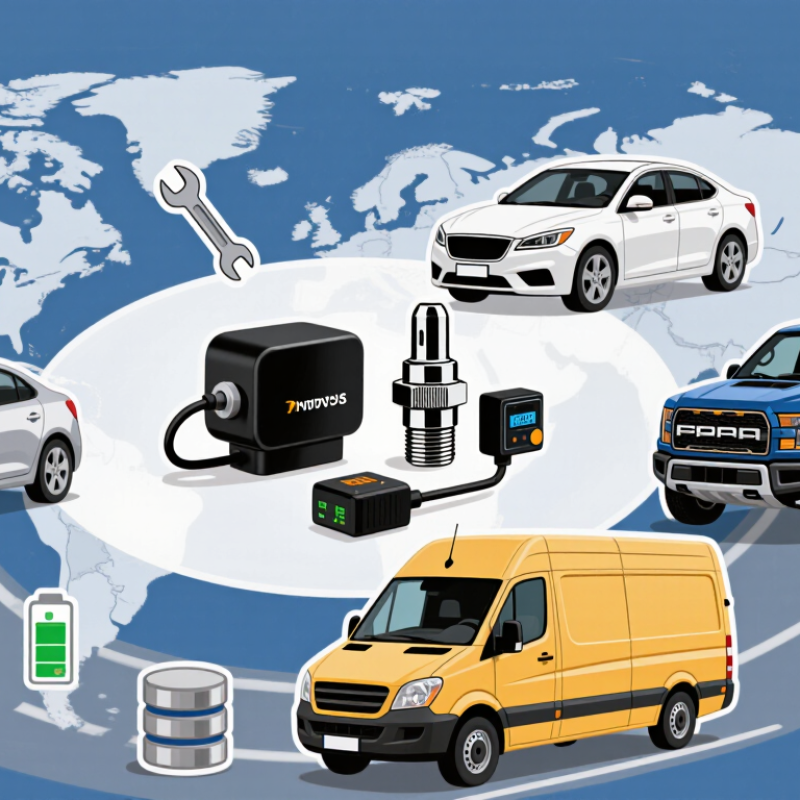
Global buyers should confirm regional frequency requirements and installation support before ordering. Batch identification, calibration information, clear instructions, and a practical warranty improve traceability. Independent testing is useful, but it cannot replace vehicle-specific verification. I have seen “compatible” listings miss a trim-level difference; that mistake is easy to overlook. No checklist is perfect. A careful buyer should compare technical data with the actual vehicle and question vague performance claims.
For global buyers, a TPMS sensor kit is only as reliable as its installation process.
NHTSA’s 2005 TPMS Final Rule estimated that this technology could prevent about 120 deaths and 8,700 nonfatal injuries annually in the United States. That benefit depends on correct sensor placement, valve torque, and sealing.
Before installation, technicians should confirm the vehicle year, frequency, valve design, and communication protocol. A universal label is not enough.
Programming requires a compatible diagnostic tool and accurate vehicle data.
Some vehicles learn sensors automatically after a short drive; others need manual relearning. Record each sensor ID before fitting it.
The workshop should also check tire pressure against the door-jamb specification, not the pressure printed on the tire sidewall.
Small details matter.
A rushed relearn can leave one wheel unrecognized.
Maintenance is often underestimated.
Replace damaged valve cores, inspect sealing washers, and avoid overtightening aluminum valves. Sensor batteries commonly last five to ten years, but cold climates, long storage, and repeated testing may shorten service life.
UNECE Regulation No. 141 emphasizes continuous tire-pressure monitoring performance, yet real-world results still depend on calibration and maintenance. Buyers should request a programming record, installation date, and battery information.
Some kits appear universal. They are not always universal in practice.
Top TPMS Sensor Kits for Global Buyers
Global Buying Factors: Standards, Costs, and Supplier Support
A reliable TPMS kit begins with market compatibility, not the lowest listed price. Check radio frequency, valve design, vehicle coverage, and regional communication requirements. A sensor that works in one country may fail during installation elsewhere. Ask for conformity documents, test reports, and clear application lists before placing a bulk order. Details matter.
Cost calculations should include programming tools, replacement valves, shipping, duties, and warranty handling. A low unit price can become expensive after repeated calibration errors. During a supplier evaluation, test sample sensors on several vehicle models. Record activation distance, signal stability, and relearn success. Small delays can disrupt a workshop for hours.
Supplier support is often the difference between a smooth launch and hidden losses. Confirm response times, software update procedures, technical manuals, and return policies. Request serial-number tracking for each batch. It supports clearer claims when defects appear. Strong suppliers explain limitations instead of promising universal coverage. That honesty is useful.
I once underestimated training costs for installers. The kit performed well, but unfamiliar programming steps caused avoidable mistakes. A short video helped, though a live technical contact would have been better. Buyers should review support quality before approving large quantities. Ask difficult questions early. That is where reliability becomes visible.