What Are the Best TPMS Sensors in 2026?
Choosing the best TPMS sensors in 2026 is less about chasing the newest feature and more about matching the sensor to your vehicle. A sensor must communicate on the correct frequency, fit the wheel, and support the vehicle’s relearn procedure. Battery life and replacement availability matter, too. A bright display cannot fix poor compatibility.
The safety case is clear. In its 2005 evaluation, the National Highway Traffic Safety Administration (NHTSA) reported that vehicles with tire pressure monitoring systems were 55.6% less likely to have one or more significantly underinflated tires. NHTSA describes the system’s purpose this way: “The TPMS is designed to warn you when one or more of your tires is significantly under-inflated.” That warning may appear before a driver notices a soft sidewall or altered handling. Still, a warning system does not replace a pressure gauge.
For practical guidance, this comparison weighs sensor accuracy, vehicle coverage, installation demands, durability, and cost. It also considers direct-fit and universal options, since neither suits every driver. A sensor can be accurate and still be the wrong choice. That is easy to overlook when product listings promise broad compatibility. Check the vehicle’s year, make, model, and sensor frequency before buying. The best TPMS sensors are the ones that fit correctly, communicate reliably, and make routine pressure checks easier—not the ones with the longest feature list.
What TPMS Sensors Do and How They Monitor Tire Pressure
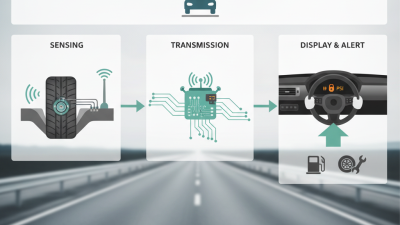
Tire pressure monitoring systems help drivers notice pressure loss before a tire looks visibly low. Direct systems use a sensor inside each wheel, often attached to the valve stem. It measures air pressure and sends readings wirelessly to the vehicle. Some sensors also track tire temperature. The dashboard may show individual readings or simply illuminate a warning light.
Small changes matter.
Other systems work indirectly. They use wheel-speed data from the anti-lock braking system to detect differences that can suggest a tire is underinflated. They do not measure air pressure itself, so their alerts may be less specific.
A warning is not a diagnosis. Check the tires with a reliable gauge, ideally when they are cold, and compare readings with the vehicle’s recommended pressure label. The number printed on a tire’s sidewall is not the usual inflation target.
TPMS sensors need occasional attention. Their internal batteries eventually run down, and a tire service may require the system to be reset or relearn wheel positions. Procedures vary by vehicle.
I find this detail easy to overlook: a warning light can also signal a sensor or system fault, not just low pressure. If the light stays on after correcting pressure, consult the owner’s manual or a qualified tire technician.
Which Types of TPMS Sensors Are Available in 2026?
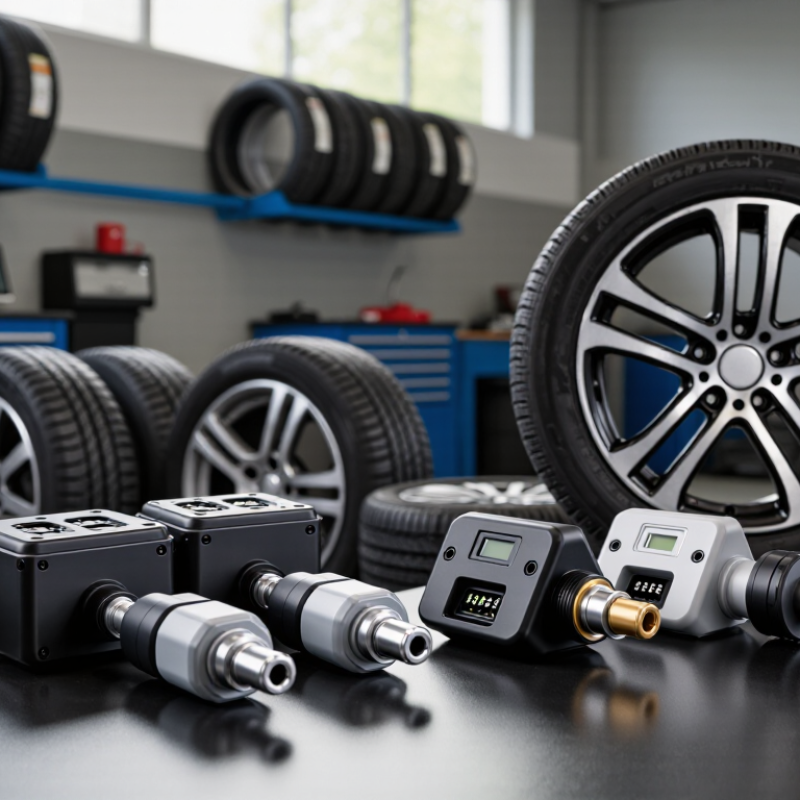
Which TPMS sensors are available in 2026? The main choice is direct or indirect. Direct TPMS uses a pressure sensor inside each wheel, usually attached to the valve stem. It measures tire pressure and may also report temperature. The dashboard can show individual tire readings. Some sensors use clamp-in metal stems; others use snap-in rubber stems. Fit depends on the wheel and the vehicle’s system.
Indirect TPMS has no pressure sensor at the valve. It uses wheel-speed data from the anti-lock braking system to detect changes in tire rotation. A tire losing pressure rolls differently, prompting a warning. This design avoids wheel-mounted sensor batteries, but it usually cannot display exact pressure. After tire rotation or pressure adjustment, recalibration may be needed. That step is easy to forget.
NHTSA’s 2005 TPMS rulemaking analysis estimated that TPMS could reduce the share of significantly underinflated tires by 55.6%. That estimate supports the safety value of monitoring, not one sensor type over another. For replacement decisions, check the vehicle’s manual and confirm sensor compatibility before installation. Direct systems offer clearer readings; indirect systems can mean fewer parts in the wheel. Neither removes the need to check pressures with a gauge. Road temperature, sensor age, and tire service can complicate the choice.
What Are the Best TPMS Sensors in 2026?
Compare the typical capabilities of the main TPMS types: direct valve-mounted, direct band-mounted, and indirect ABS-based systems.
Direct TPMS sensors measure tire pressure at each wheel; valve-mounted and band-mounted versions differ mainly in how they attach inside the wheel. Indirect TPMS uses wheel-speed data to identify pressure loss rather than measuring pressure directly. “Yes” and “No” show typical system capabilities, which can vary by vehicle. The best type depends on the vehicle’s original equipment and the driver’s need for individual tire-pressure readings.
How to Evaluate TPMS Sensor Accuracy, Compatibility, and Durability
What Are the Best TPMS Sensors in 2026?
How to Evaluate TPMS Sensor Accuracy, Compatibility, and Durability
A dependable TPMS sensor should report pressure consistently, fit the vehicle’s system, and withstand years of heat, vibration, and road spray. Check readings against a calibrated tire gauge when tires are cold; a dashboard display is useful, but it is not a substitute for verification. NHTSA’s 2005 evaluation reported a 55.6% lower likelihood of a tire being at least 25% underinflated in vehicles with TPMS. That is meaningful, though a sensor cannot correct pressure by itself. NHTSA’s FMVSS No. 138 sets a warning threshold tied to pressure falling substantially below the vehicle’s recommended level.
Compatibility takes more than matching a sensor’s frequency. Confirm the vehicle year, make, model, valve type, and sensor protocol, then check whether programming or a relearn procedure is needed. A wrong fit may look right in a parts listing and still fail to communicate. For durability, inspect the valve stem and sealing components during tire service. Ask about battery life and replacement options; estimates vary, and harsh conditions can shorten service life. Tiny details matter.
Tips: Compare each sensor with a trusted gauge. Keep the vehicle placard pressure handy. After installation, confirm that every wheel reports correctly. One caveat: even good sensors can drift, so occasional checks are still wise.
How the Best TPMS Sensors Compare Across Common Use Cases
What Are the Best TPMS Sensors in 2026?
For routine commuting, indirect TPMS can suit drivers who want fewer components inside the tires. It estimates pressure changes from wheel-speed differences, but may need recalibration after rotation or inflation. Direct sensors measure pressure at each wheel and usually provide clearer, tire-specific alerts. They are useful when a slow leak needs locating. The trade-off is sensor battery life and replacement work when tires are serviced.
For towing, frequent highway travel, or changing loads, live readings from direct sensors can make pressure checks more practical. NHTSA’s Federal Motor Vehicle Safety Standard No. 138 requires a warning when pressure falls substantially below the vehicle’s recommended level. That alert is a backstop, not a substitute for checking cold tire pressure with a gauge. A warning threshold may arrive later than a careful driver would like.
Cost-conscious drivers may prefer an existing indirect system, while owners adding sensors should verify wheel compatibility and installation requirements. The U.S. Department of Energy reports that correct tire inflation can improve fuel economy by up to 3%; each 1 psi drop across all tires can reduce it by about 0.2%. Small changes add up. Still, neither figure guarantees the same result for every vehicle or route.
TPMS also cannot reliably tell whether a tire is worn, damaged, or simply underinflated from the start. It is easy to trust the dashboard too much.
How to Choose and Install the Right TPMS Sensor for Your Vehicle
Choosing a TPMS sensor starts with your vehicle, not a product listing. Check the owner’s manual or service information for the required sensor type, frequency, and relearn procedure. Direct systems use sensors inside the wheels; indirect systems estimate pressure through wheel-speed data and may not use replaceable pressure sensors. Check carefully.
For a direct replacement, match the sensor to the vehicle’s year, model, and trim, and confirm that its valve stem suits the wheel. A sensor that looks right may still need programming before the vehicle can recognize it. Small details matter. Ask a qualified tire technician to verify compatibility before the tire is removed.
Installation often means removing the tire from the rim, so it is not just a quick valve swap. The sensor can be damaged by tire-changing equipment, and the valve hardware needs the specified service procedure. After fitting, the system may require a scan-tool relearn or a drive cycle; follow the vehicle maker’s instructions rather than assuming the warning light will clear on its own. Check pressure with a reliable gauge after installation. Even a careful match can fail if the relearn step is missed, which is an easy detail to overlook.